had a good day at the hackathon. around 200 people showed up. lovely food, lovely people.
worked on something called "mutual connections" for this one. the sponsors were weaviate, neo4j, vapi, coderabbit, friendliAI, and sovren. we had to integrate them into whatever we built.
so here's the idea. an application that analyzes your social media posts. linkedin, x, threads, whatever. it reads through what you share, what you talk about, figures out your interests, your ideas, your personality. it also takes into account what you're actively looking for. like what types of people you want to meet, what kind of conversations you're interested in having.
and when you register for an event, it matches you with other attendees. people with shared interests, complementary skills, aligned goals. it suggests who you should meet. highlights mutual connections, interesting overlaps. makes intros easier, more contextual.
the whole point is to make event networking less awkward and more useful. you show up already knowing who's worth talking to and why. personalized matching before you even walk through the door.
i realized something while they were judging. most hackathon judges aren't looking for some polished, feature complete product. they're looking for three things. does the app work? like the basic version, the minimum viable product. how are you presenting it. and how well did you integrate the sponsor tools. that's pretty much it.
also i’ve taken a little note on judging, so once you understand what the judging criteria actually is, you need to position your project around that. make it easily understandable. make it score well on their rubric.
most people, myself included, we get an idea, a vague one and then we try to flesh it out. write up some product requirements. start building features. figure out the presentation later. but that's backwards.
instead, picture the end first. like actually visualize it perfectly. what are you going to present. what's the presentation going to look like. what functions and features are you going to show. what needs to work for the demo to make sense.
then build backward from there. start with the presentation in your head, the exact flow, the exact features you'll demo. then build only what supports that vision.
was fun, someone built a product called “amazon john” basically he connected a visual model to amazon account so he can look at something and say “buy me this” and it will actually check it up on amazon, adds to the card, uses his credit card and purchases it.
later, i got into a conversation with this psychologist who was sitting in the audience. he's around 80, from new york, now chilling in the bay area. we went deep on human psychology, the basic needs, and all that.
i've been thinking a lot about how AI is letting us rebuild everything. all the software, all the systems we've built. and if we're rebuilding from scratch, shouldn't we go back to first principles and think in terms of what actually makes humans tick and what are the root human needs, intentions, the natural language patterns we use.
that's what i asked him about.
his answer was blunt. he said humans are basically living for survival. that's it. they only care about their own survival. they don't care about the rest of the people.
harsh. but it made me think. if survival is the core drive, then everything else we assume about human motivation, all those other layers, they're just built on top of that base instinct.
Back to hacks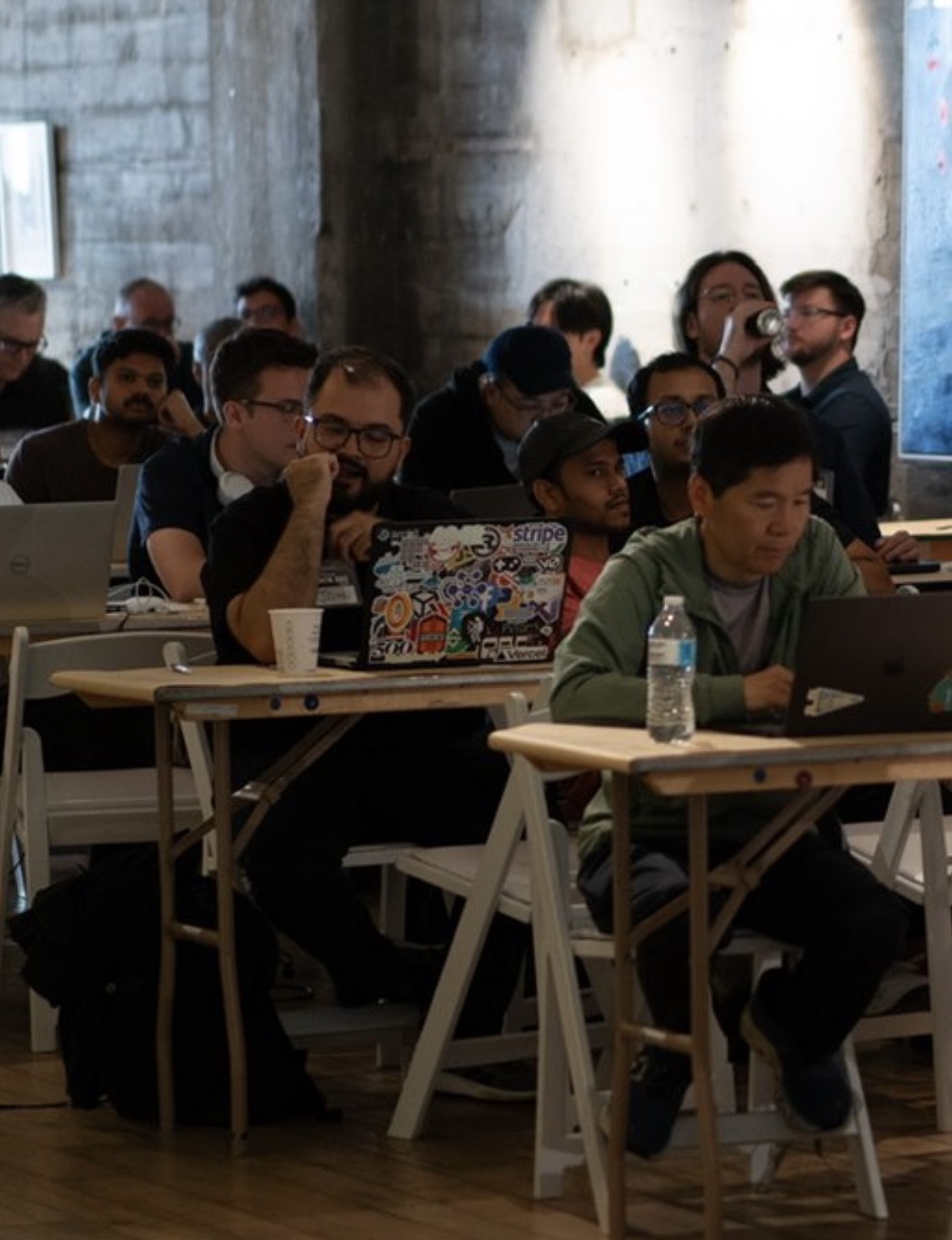
Mutual connections
AI conference Hackday •2025
•San Francisco
•Role: solo
Tech Stack
Share it on